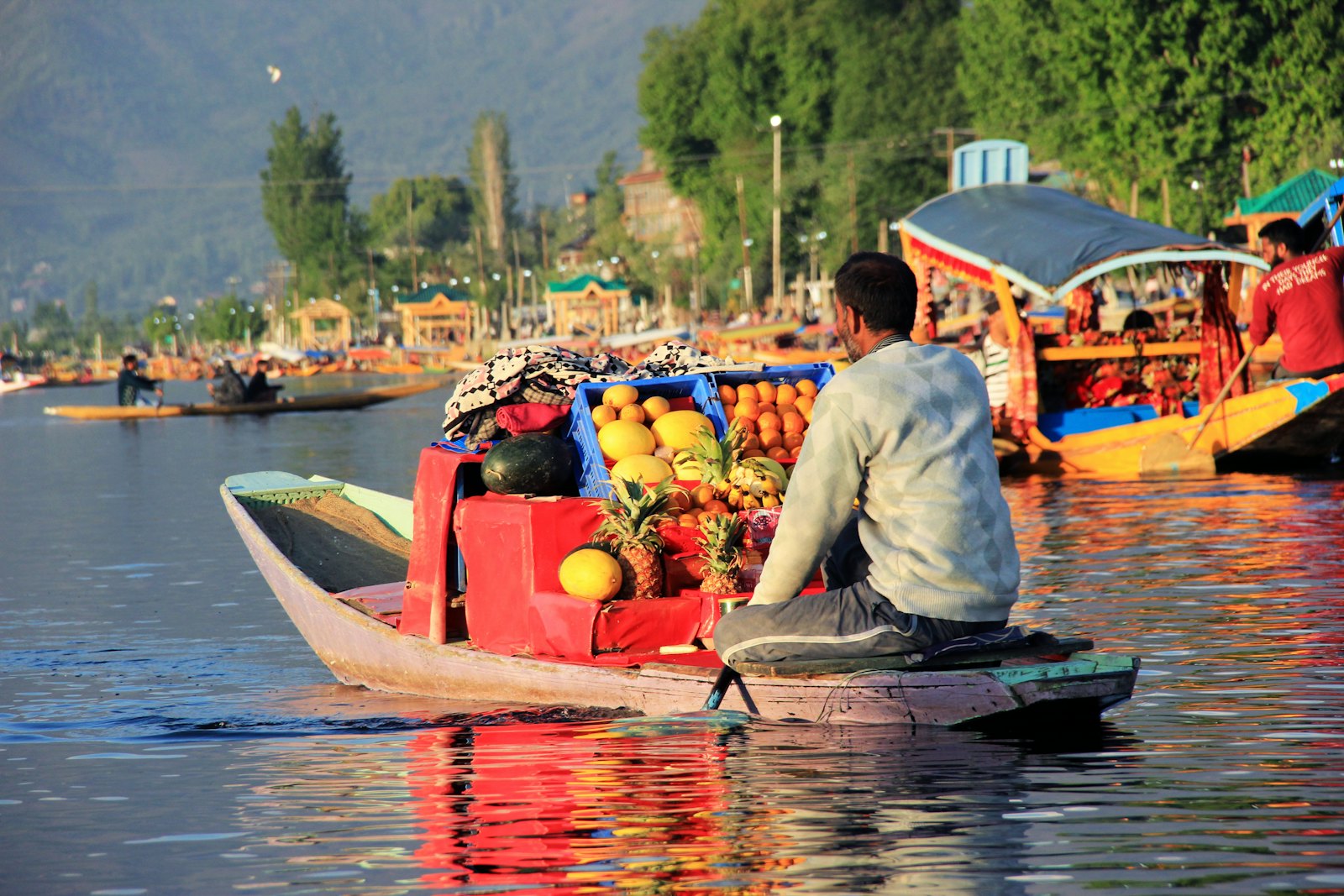
Long before the rest of Srinagar stirs, Dal Lake is already wide awake. While the city sleeps under a blanket of mist, shikaras loaded with cauliflowers, lotus stems, and bundles of fresh greens begin gliding silently across the water, converging at a quiet bend near Gagribal. This is the floating vegetable market — one of the last living examples of a centuries-old trade that has fed Srinagar since the time of the Mughals.
A Market With No Stalls
There are no counters here, no fixed prices chalked on boards — just boat after boat, each one a floating shopfront. Farmers from the lake's interior villages, many of whom have tended these waters for generations, paddle in before sunrise to sell what they grew that very night on floating gardens called raadh. Cauliflower, kohlrabi, lotus root (nadru), and water spinach pass from boat to boat in transactions as old as the lake itself — a nod, a price, a handful of notes, and the produce changes hands without either party stepping onto dry land.
Why Sunrise Matters
Arrive any later than 5:30 AM and you'll miss the real show. The market exists in a narrow window — by the time the sun clears the Zabarwan hills, most boats have already dispersed toward the city's markets. The hush is part of the experience: oars dipping softly, the occasional bartering murmur, and the lake exhaling mist as the first light touches the water. Photographers chase this hour for good reason; the colors of the vegetables against the silver-grey lake at dawn are unlike anything else in Kashmir.
Getting There
Hire a shikara the evening before and arrange an early start — most boatmen near Ghat 16 or Nehru Park know the market's rhythm well and will time the ride perfectly. Dress warmly, even in summer; the lake holds onto its chill until well after sunrise.
Beyond the Vegetables
The market isn't just commerce — it's a living archive of how Dal Lake's communities have sustained themselves without ever needing the shore. Floating gardens, floating homes, and now a floating market: an entire ecosystem built on water, quietly persisting against the tide of modern Srinagar. Spend an hour here, and you'll understand why locals still call the lake the city's other backbone.