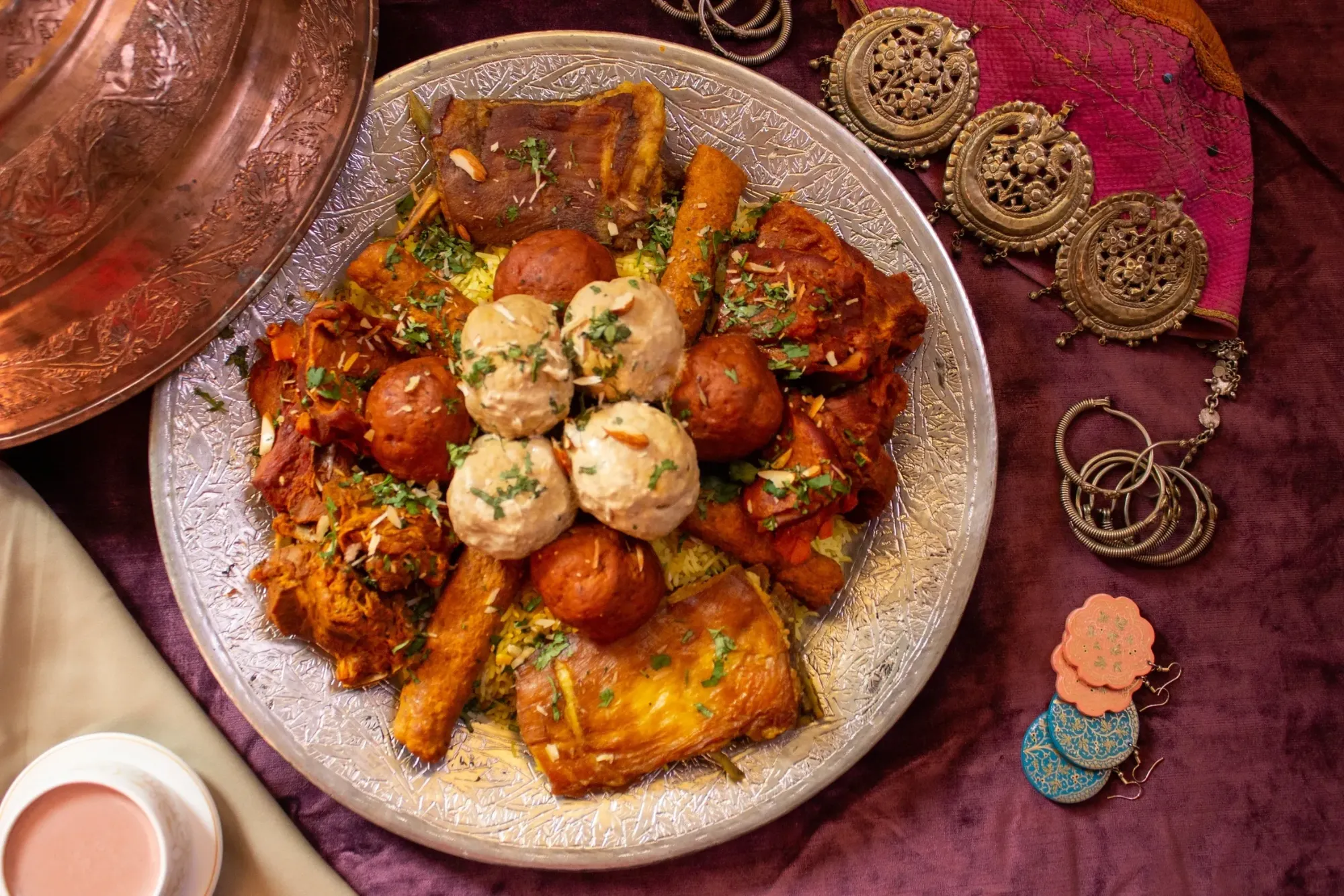
There's a moment at every Kashmiri wedding when the trami arrives — a single large copper plate, shared between four guests, piled high with rice and meticulously arranged meat dishes. Conversation pauses. This is the Wazwan, and once it begins, it commands the room.
A Feast Built on Ceremony
Wazwan isn't a meal so much as a performance, traditionally prepared by a waza — a hereditary master chef — and his team of assistants, who can spend an entire night cooking for hundreds of guests. The full ceremonial Wazwan consists of dishes served in careful sequence, though the number prepared varies by occasion; weddings call for the most elaborate spread, sometimes stretching past a dozen courses.
What's on the Plate
Each dish in a Wazwan has its own technique, and a good waza is judged on how well he executes the most demanding ones:
- Rista — meatballs simmered in a fiery red gravy, made by hand-pounding meat for hours until it reaches the right texture.
- Rogan Josh — tender lamb in a deep red, aromatic curry, colored not by chili alone but by Kashmiri ratanjot.
- Gushtaba — considered the finale of the feast, delicate meatballs in a creamy, mild yogurt-based curry, traditionally the last dish served.
- Tabak Maaz — ribs simmered until soft, then fried to a deep golden crisp.
- Yakhni — meat cooked in a yogurt gravy fragrant with whole spices, prized for its gentleness against the meal's richer dishes.
The meal is eaten communally, by hand or spoon, off the shared trami — a structure that's as much about hospitality and togetherness as it is about food.
A Cuisine of Quiet Influence
Wazwan's roots trace back to Central Asian and Persian culinary traditions, brought to the valley centuries ago and adapted with Kashmiri ingredients — saffron, dried Kashmiri chilies, fennel, and yogurt — into something distinct. It's a cuisine that rewards patience: meats marinated and slow-cooked, gravies built over hours, never rushed.
Where to Experience It
While Wazwan is traditionally reserved for weddings and major celebrations, several restaurants in Srinagar now offer curated versions for visitors, often as a multi-course set menu. Ask for it a few hours in advance where possible — much of what makes Wazwan remarkable simply can't be hurried. Sit on the floor if you're offered the choice, share the trami if you can, and save room: gushtaba arrives last for a reason.