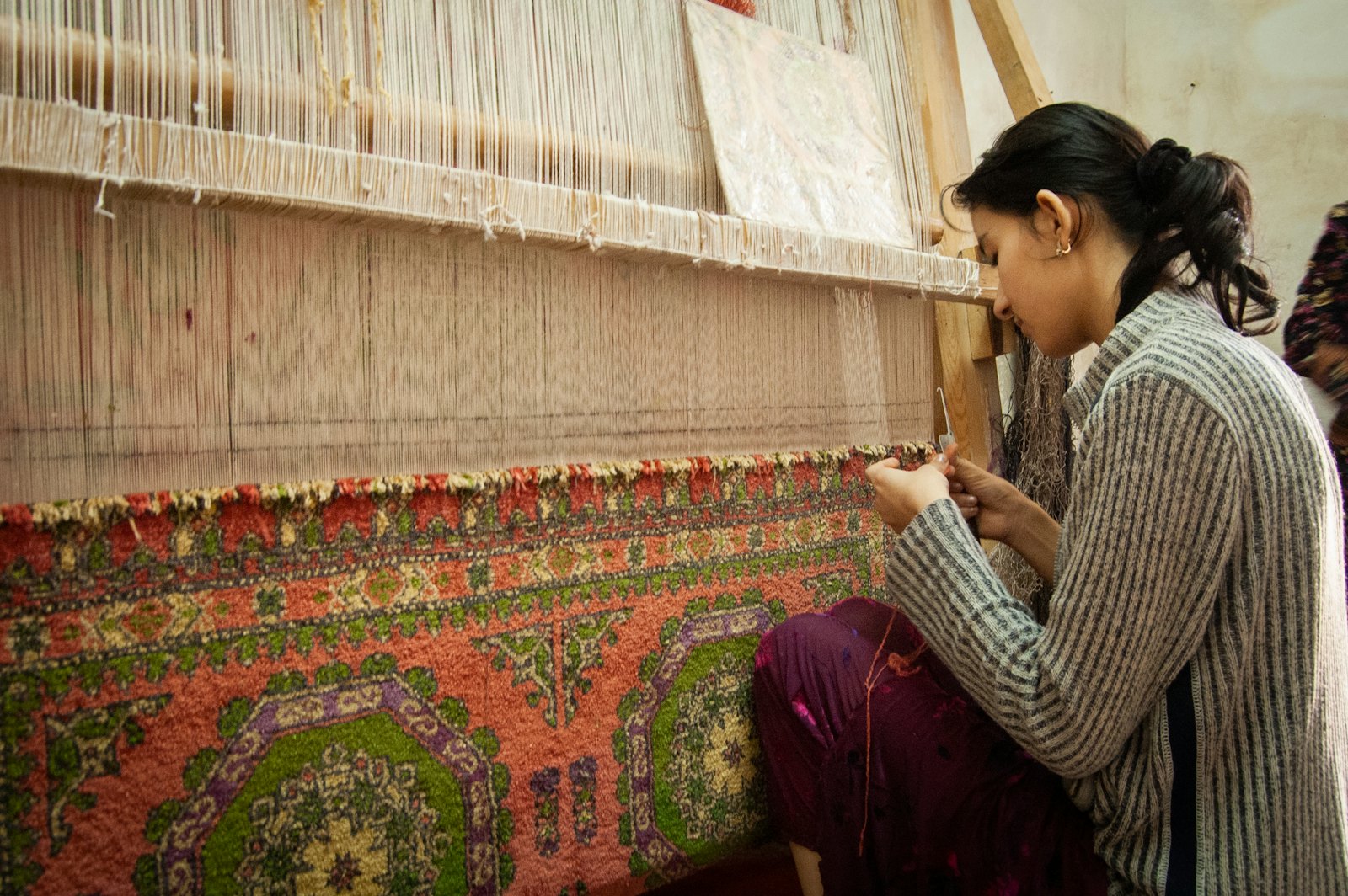
In the narrow lanes of downtown Srinagar, behind unmarked doors and modest shopfronts, sits a craft so demanding that a single shawl can take months — sometimes over a year — to complete. This is the world of pashmina, Kashmir's most famous export and one of its most fragile living traditions.
From Mountain Goat to Loom
Pashmina begins far from any workshop, high in the Changthang plateau of Ladakh, where Changthangi goats grow an undercoat of impossibly fine wool to survive winters that dip below -30°C. Herders comb out this soft fibre — never shorn — each spring, and what they collect is a fraction of what a sheep yields in ordinary wool. It's this scarcity, combined with a fibre diameter thinner than human hair, that makes pashmina what it is.
The Hands That Make It Real
Once the raw wool reaches Kashmir, it passes through a relay of specialists, each trained in a single, exacting skill:
- Spinners, almost always women, draw the wool into yarn on a yinder — a simple spinning wheel — by hand, since machine spinning breaks the delicate fibre.
- Weavers work traditional looms for weeks to produce a single plain shawl, longer still if a pattern is involved.
- Sozni embroiderers add the fine needlework Kashmir is renowned for, sometimes spending six months to a year on one piece, working from memory rather than printed patterns.
No single artisan sees a shawl from start to finish. It passes through dozens of hands before it's ready, each one trusting the last.
A Craft Under Pressure
Genuine handwoven, hand-spun pashmina has become rare, squeezed by machine-made imitations and the sheer time investment the real craft demands. Many weaving families have practiced this work for generations, yet fewer young Kashmiris are choosing to continue it, drawn instead toward steadier, faster livelihoods. What survives today does so largely because of buyers who understand — and pay for — the difference between authentic pashmina and the synthetic blends that flood souvenir markets.
Seeing It For Yourself
A handful of cooperatives and family workshops in Srinagar still welcome visitors to watch the process first-hand — the rhythmic clack of the loom, the spinner's wheel turning by candlelight in winter, the embroiderer hunched over a half-finished motif. Watching a sozni artisan work even a single flower petal makes the price tag on a finished shawl suddenly make sense. This isn't just a textile. It's hundreds of hours of inherited skill, woven into something you can fold into your palm.